


A completed weld may look acceptable on the surface, but large industrial projects require more than visual assurance.
Project owners, engineers and inspectors need confidence that the materials used were correct, genuine and suitable for the approved application. They may also need records that connect those materials to the relevant batch, manufacturer and certification documents.
This is where traceability and material documentation become essential.
For compliance officers and lead engineers, these records help establish a clear line between what was specified, what was purchased and what was used on site. When the documents are organised from the beginning, project handovers become easier. When they are incomplete, even properly executed work may face avoidable questions and delays.
What Does Traceability Mean in Welding?
Traceability is the ability to follow a welding consumable from its manufacturer and production batch through procurement, storage and final use.
Depending on the project, this may involve recording:
- Manufacturer name
- Product name and classification
- Batch or lot number
- Product size
- Quantity received
- Delivery date
- Purchase order
- Storage location
- Area or joint where the product was used
- Relevant certificate or test report
The required level of detail varies.
A general repair job may not require the same documentation as a pressure vessel, offshore structure, shipbuilding project or critical structural component. The project specification, welding procedure and applicable standard should determine what must be recorded.
The key principle is consistency. A traceability system is only useful when materials can be linked accurately to the relevant records.
Mill Certificates, Material Certificates and Test Certificates
The term “mill certificate” is often used broadly in industrial procurement.
In practice, project teams may encounter several document names, including:
- Mill Test Certificate
- Material Test Certificate
- Manufacturer’s Test Certificate
- Certificate of Conformance
- Inspection Certificate
- Product data sheet
- Classification approval certificate
These documents do not necessarily provide the same information.
A material or manufacturer’s test certificate may contain batch-specific details, chemical composition, mechanical properties or test results. A certificate of conformance may confirm that the supplied product complies with a stated specification but contain less detailed test data.
Classification approvals may show that a product has been approved by a recognised body for a particular application or grade. However, approvals can change and may not apply to every manufacturing location or product variation.
Kobelco’s welding handbook advises customers to confirm current ship-classification approval information where it is required for a particular welding consumable.
Compliance teams should therefore verify exactly which document the contract requires rather than assuming that any certificate will be sufficient.
Why Documentation Matters During Project Handover
The handover stage brings together information from engineering, procurement, fabrication, quality assurance and site operations.
By this point, the physical work may be substantially complete. However, the customer still needs evidence that the agreed procedures and materials were followed.
Welding consumable records may form part of a larger handover package containing:
- Approved welding procedure specifications
- Procedure qualification records
- Welder qualification records
- Inspection reports
- Non-destructive testing results
- Material certificates
- Consumable certificates
- Calibration records
- Repair records
- As-built documentation
If the welding consumable information cannot be located, the quality team may have to work backwards through delivery orders, warehouse records and site logs.
That process takes time and may still leave gaps.
Good traceability allows the team to answer key questions quickly:
- Which consumable was approved?
- Which product was delivered?
- Which batch was used?
- Is the supporting documentation available?
- Can its use be connected to the relevant work area?
Traceability Helps Confirm Product Authenticity
Traceability is not only an administrative requirement. It also supports supply chain integrity.
Welding consumables purchased through an unclear or unauthorised channel may raise questions about authenticity, handling and storage. Packaging alone may not provide enough assurance, particularly where a project requires controlled materials.
Working with an authorised Kobelco distributor creates a clearer route back to the manufacturer.
The Babbitt Trading Pte Ltd (“Babbitt Trading”) is the sole authorised distributor of Kobelco welding consumables in Singapore. It supplies covered electrodes, flux-cored wires and TIG welding rods through an official distribution channel.
For compliance teams, an accountable supply route can make it easier to verify the origin of the product and request relevant supporting information.
The Cost of Missing or Incomplete Records
Documentation gaps often become visible late in the project, when time is limited and commercial pressure is high.
For example, an inspector may ask for the certificate linked to a particular batch of electrodes. The purchasing team may have an invoice showing the product name but no batch information. The warehouse may have already discarded the original packaging. The site team may know which electrode was normally used but cannot prove which batch went into the inspected weld.
Even when there is no evidence of a technical defect, the lack of records may create uncertainty.
Possible consequences include:
- Delayed inspection approval
- Additional document searches
- Repeated communication with suppliers
- Requests for clarification from the client
- Extra testing
- Rework in serious cases
- Delayed handover or payment
- Negative audit findings
The cost of managing these issues can exceed the effort required to build a clear documentation process at the procurement stage.
What to Request From a Welding Consumable Supplier
Documentation requirements should be communicated before the order is placed.
The buyer should tell the welding electrode supplier which documents are required, whether batch-specific certification is necessary and how records should be submitted.
A typical request may include:
- Exact product name
- AWS, EN, JIS or other applicable classification
- Diameter or product size
- Manufacturer
- Batch or lot number
- Certificate of conformance
- Material or manufacturer’s test certificate
- Relevant classification approval
- Product data sheet
- Safety data sheet, where applicable
- Country of origin, if contractually required
Not every document is available or required for every product. The supplier should therefore be given enough time to confirm availability with the manufacturer.
Waiting until the handover stage to request historical batch documents creates unnecessary risk.
Match the Certificate to the Delivered Product
Receiving a certificate is not the end of the traceability process.
The quality or receiving team should verify that the document corresponds to the material that arrived.
Check whether the following details match:
- Manufacturer
- Product designation
- Classification
- Diameter or size
- Batch or lot number
- Manufacturing location, where relevant
- Referenced standard
- Certificate date
- Approval scope
Any discrepancy should be raised before the consumable is released for use.
A certificate for the correct product but the wrong batch may not satisfy a batch-specific traceability requirement. Similarly, a general product brochure cannot replace a test certificate when the contract specifically calls for batch test results.
Preserve Batch Information During Storage
Traceability can be lost after delivery if consumables are removed from their original packaging without a suitable identification system.
This is particularly relevant when:
- Several batches of the same product are stored together
- Electrodes are transferred into holding ovens
- Partial packs are moved between work areas
- Different diameters look similar
- Labels become damaged
- Unused materials are returned to the store
Warehouse and site teams should use a process that preserves the product and batch identity.
Depending on the operation, this may involve labelled storage sections, batch-controlled issue records, tagged containers or digital inventory tracking.
The process should be practical enough for employees to follow during normal work. An overly complicated system may look strong on paper but fail under actual site conditions.
Connect Consumable Records to the Welding Process
For critical work, the traceability chain should continue beyond the warehouse.
The project may need to associate the issued consumable with:
- A work order
- Weld map
- Joint number
- Spool number
- Fabrication drawing
- Welder identification
- Shift or date
- Welding procedure specification
This creates a more complete record of how the material moved from delivery to use.
The appropriate level of detail should be agreed by the project team. Tracking every electrode to every weld may be unnecessary for some work and mandatory for others.
The goal is not to create paperwork for its own sake. It is to produce enough reliable evidence to meet the project’s contractual, quality and safety requirements.
How the Right Supplier Supports Compliance
A professional welding supplier should understand that enterprise customers may need more than physical stock.
The supplier may also be asked to assist with:
- Confirming exact product classifications
- Identifying suitable Kobelco product ranges
- Locating manufacturer literature
- Checking certificate availability
- Confirming batch information
- Supporting urgent document requests
- Coordinating product and delivery records
This support is particularly valuable when project documents use a classification rather than a manufacturer’s commercial product name.
An experienced supplier can help the customer identify the corresponding option, subject to confirmation by the project’s welding engineer or approved welding procedure.
Babbitt Trading has supplied welding consumables in Singapore since 1978 and provides access to Kobelco covered electrodes, flux-cored wires and TIG welding rods. Its website also provides the Kobelco welding handbook for customers reviewing product classifications and specifications.
Choosing Welding Rod Suppliers in Singapore
Not all suppliers offer the same level of documentation support.
When evaluating welding rod suppliers in Singapore, procurement and quality teams should ask:
- Is the supplier authorised by the manufacturer?
- Can it verify the origin of the products?
- Are batch details retained?
- Can required certificates be requested before delivery?
- Does the quotation clearly identify the product and classification?
- Can the supplier support technical and documentation enquiries?
- Are products stored and handled appropriately?
- Is there a local contact when clarification is needed?
These questions help distinguish a basic product seller from a supplier capable of supporting controlled industrial projects.
Build Traceability Into Procurement From the Start
The best time to organise welding documentation is before the consumables reach the worksite.
Include documentation requirements in the request for quotation and purchase order. Confirm which certificates are available. Check the batch information during receiving. Preserve identification during storage and issue. Connect the records to the relevant work package where required.
This creates a traceable path that is much easier to review during inspection and final handover.
As an authorised Kobelco distributor and established welding electrode supplier, Babbitt Trading can support customers sourcing genuine Kobelco welding consumables for projects in Singapore.
Speak with Babbitt Trading early about the required product classification, batch information and supporting documents so that your procurement and handover requirements can be addressed before materials are needed on site.
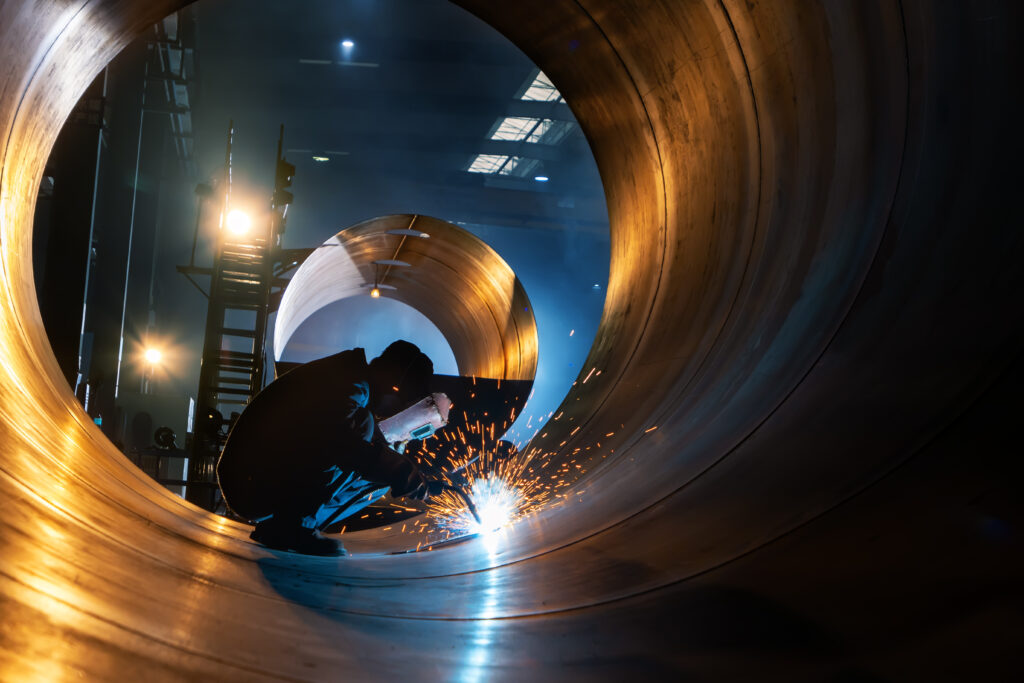
Heavy industry depends on thousands of decisions being made correctly every day.
Some involve large equipment and complex engineering. Others concern items that may seem small by comparison, such as welding electrodes, wires and filler rods. Yet when a welding consumable does not meet the required specification, the consequences can include failed inspections, rework, production delays and questions about structural reliability.
That is why industrial businesses rarely assess suppliers on price alone. Product authenticity, technical understanding, availability and service consistency all matter.
Established in Singapore in 1978, The Babbitt Trading Pte Ltd (“Babbitt Trading”) has spent more than four decades supplying welding consumables to businesses working in demanding industrial environments. We are also the sole authorised distributor of Kobelco welding consumables in Singapore.
Built Around the Needs of Industrial Customers
Industrial purchasing is different from ordinary retail purchasing.
A customer is not simply choosing an item from a shelf. The selected welding consumable may need to match:
- A particular base material
- A specified welding process
- Required mechanical properties
- An approved welding procedure
- A welding position
- Project or classification requirements
- Productivity and deposition targets
- Inspection and documentation needs
The role of the supplier is therefore not limited to processing an order. It also involves helping the customer identify an appropriate product and ensuring that the ordered material can be supplied reliably.
Over the years, Babbitt Trading has developed its business around this combination of product access, industry familiarity and customer support.
A Singapore Business With More Than Four Decades of Experience
Babbitt Trading was established in 1978. Since then, Singapore’s industrial landscape has changed considerably.
Manufacturing methods have advanced. Project specifications have become more detailed. Quality, safety and traceability expectations have increased. Supply chains have also become more international and more exposed to disruption.
Throughout these changes, the fundamental expectations placed on an industrial supplier have remained consistent. Customers need the correct product, in the required quantity, within the agreed timeframe.
The longevity of The Babbitt Trading Pte Ltd is meaningful because industrial trust is built gradually. A supplier earns repeat business by demonstrating that it can respond consistently across routine orders, technical enquiries and urgent project requirements.
Longevity alone does not guarantee service quality, but it gives a supplier the opportunity to develop practical knowledge that cannot be gained from a catalogue.
A Long-Standing Relationship With Kobelco
A central part of Babbitt Trading’s history is our relationship with Kobelco.
Babbitt Trading is the sole authorised distributor of Kobelco welding consumables in Singapore. Its website states that the partnership has continued for more than four decades.
For customers sourcing products associated with Kobelco, authorised distribution provides a clearer and more accountable supply route.
It helps customers obtain genuine welding consumables sourced through an official channel rather than products with uncertain origins or storage histories.
This matters because welding consumables are engineered products. Their composition, coating, manufacture, packaging and handling can affect how they perform during welding and whether the resulting weld meets the intended requirements.
An authorised local distributor also provides a direct commercial point of contact when customers need assistance with product selection, availability or supporting information.
Welding Consumables for Different Applications
There is no single welding consumable suited to every job.
Different processes, materials and operating conditions call for different product types. Babbitt Trading’s Kobelco portfolio includes three main categories.
Covered Electrodes
Covered electrodes are used in shielded metal arc welding and remain widely used for fabrication, construction, repair and maintenance work.
Product selection depends on factors such as tensile strength, coating type, welding position, current requirements and the material being joined.
Kobelco’s covered electrode ranges supplied by Babbitt Trading include products for general fabrication as well as more specialised welding requirements. The company highlights their stable arc performance, weld consistency and ease of operation.
Flux-Cored Wires
Flux-cored arc welding is often selected for applications requiring higher deposition rates and strong productivity.
These wires are commonly used in demanding fabrication environments where businesses need to balance welding speed with consistent weld quality.
Babbitt Trading supplies Kobelco flux-cored wires designed for industrial welding applications and different welding positions.
TIG Welding Rods
TIG welding is commonly associated with precise control and clean weld appearance.
The correct filler rod must be matched to the base material and service requirements. Babbitt Trading supplies Kobelco TIG welding rods for applications involving materials such as stainless steel and other demanding metals.
Offering multiple consumable categories allows the supplier to support customers across different processes rather than treating every welding requirement in the same way.
Supporting Singapore’s Heavy Industries
Welding plays a critical role across many sectors, including construction, marine engineering, transport, manufacturing and heavy fabrication.
Although each sector operates differently, they share several concerns:
- Weld reliability
- Material compatibility
- Operator productivity
- Product consistency
- Project schedules
- Safety requirements
- Inspection readiness
A structural steel fabricator may prioritise all-position weldability and dependable mechanical properties. A marine project may have specific classification requirements. A maintenance team may need a versatile consumable that can be used reliably under site conditions.
These differences make product selection important.
Babbitt Trading’s role is to help businesses navigate the available options and source consumables suited to the intended application. Its position is not simply that of a reseller, but as a local link between Kobelco’s welding product portfolio and the practical needs of Singapore customers.
Why Product Authenticity Matters
Counterfeit, substituted or poorly stored consumables can introduce risk into welding operations.
The packaging may appear convincing, but the customer may not have confidence in the product’s manufacturing source, storage history or batch traceability. Even when a product is genuine, unsuitable storage can affect certain welding consumables.
Buying through an authorised distributor reduces uncertainty surrounding the supply chain.
Babbitt Trading states that its authorised status provides customers with genuine Kobelco products sourced through the manufacturer’s recognised distribution channel.
For enterprise buyers, this can support internal supplier controls and reduce the risk of introducing unverified materials into a project.
Local Stock and Responsive Delivery
Industrial projects do not always proceed exactly according to plan.
Consumption may be higher than forecast. A project schedule may be brought forward. An additional work area may open. A customer may discover that a different size or classification is required.
In these situations, access to local supply can become as important as the product itself.
Babbitt Trading maintains a facility in Singapore and highlights local inventory, delivery support and self-collection as part of its service.
This local presence can help customers avoid some of the uncertainty associated with sourcing every requirement from overseas. It also provides a nearby contact when an urgent order or product enquiry arises.
Stock availability will naturally depend on the item and quantity required, so specialised or high-volume orders should still be discussed as early as possible.
Practical Knowledge Beyond the Product Catalogue
Product data sheets and manufacturer handbooks are valuable, but they do not always answer every practical question.
A buyer may know the required classification but still need help identifying the corresponding Kobelco product. A welding team may be evaluating alternatives for a particular application. An engineer may need to confirm whether supporting approval information is available.
A supplier with longstanding product experience can help customers find the relevant information more efficiently.
Babbitt Trading provides access to the Kobelco welding handbook and supports enquiries across its covered electrode, flux-cored wire and TIG rod ranges.
The final technical decision must remain aligned with the approved welding procedure and project requirements. However, knowledgeable supplier support can make the sourcing process clearer.
Growing Beyond Welding Consumables
While Kobelco welding consumables remain central to the business, Babbitt Trading has expanded its range to support more of the metalworking workflow.
The company now distributes Saint-Gobain Flexovit cutting and grinding wheels. These products support material cutting, edge preparation, cleaning and weld finishing before and after the welding stage.
This development reflects a broader approach to industrial supply.
Customers can discuss welding consumables and related abrasive requirements with one company, helping procurement teams reduce fragmentation and coordinate related orders more efficiently.
What Enterprise Customers Should Expect From a Supplier
A strong industrial supply relationship should provide more than access to a recognisable brand.
Enterprise customers should assess whether a prospective supplier can offer:
- A legitimate and accountable supply route
- Suitable products for the required application
- Clear and accurate quotations
- Reliable order fulfilment
- Responsive communication
- Support for product and documentation enquiries
- Consistent service after the first order
The search phrase “the Babbitt Trading Pte Ltd” is sometimes used by customers looking for the company online, but the registered trading name presented on its website is Babbitt Trading Pte Ltd.
More importantly, customers should assess the company based on its product authorisation, experience and ability to meet their operational needs.
Trust Is Built One Order at a Time
More than four decades in business represents thousands of quotations, deliveries, technical discussions and project requirements.
It also reflects the continued trust of customers who need dependable access to welding consumables in Singapore.
For businesses searching for genuine Kobelco products, local stock support and an experienced industrial supplier, The Babbitt Trading Pte Ltd provides an established route to the Kobelco welding range.
Contact Babbitt Trading to discuss your welding application, required classification, product quantity and delivery schedule.
Managing industrial supplies is rarely as simple as placing an order and waiting for delivery.
For operations and supply chain teams, every additional vendor brings another quotation process, purchase order, delivery schedule, invoice and point of contact. When welding consumables and abrasives are sourced separately, these administrative demands can quickly add up, especially across multiple projects or worksites.
Consolidating related products under one dependable supplier can make procurement easier to manage. By sourcing Kobelco welding consumables and Saint-Gobain Flexovit abrasives through The Babbitt Trading Pte Ltd (“Babbitt Trading”), businesses can cover several important stages of the metalworking process through one local supplier.
The Hidden Cost of Managing Too Many Vendors
Maintaining a large vendor list may appear to provide more purchasing options, but it also creates additional work.
Each supplier has its own:
- Quotation format
- Ordering procedure
- Payment terms
- Minimum order requirements
- Delivery arrangements
- Product lead times
- Account representative
This places a greater administrative burden on procurement teams. Staff may spend valuable time following up on separate quotations, reconciling invoices and coordinating deliveries for products that are ultimately used within the same workflow.
Vendor consolidation does not mean reducing options at the expense of quality. It means identifying product categories that can be sourced efficiently through one accountable supplier.
Welding consumables and abrasives are a practical example because both are regularly required during metal fabrication, repair and maintenance work.
Welding and Abrasives Are Part of the Same Workflow
Cutting wheels, grinding wheels and welding consumables may sit under different categories in a purchasing system, but they often support different stages of the same job.
A typical fabrication process may involve:
- Cutting metal plates, pipes or structural sections to size
- Grinding or bevelling edges before welding
- Cleaning the joint area
- Welding the prepared components
- Grinding and finishing the completed weld
An established abrasive supplier in Singapore can support the cutting, preparation and finishing stages. A welding consumables supplier supports the joining process itself.
Sourcing both categories under one roof gives procurement teams a more connected way to manage the complete workflow.
Babbitt Trading supplies Saint-Gobain Flexovit cutting and grinding wheels alongside its established range of Kobelco covered electrodes, flux-cored wires and TIG welding rods. This allows customers to source complementary products for metal preparation and welding through a single point of contact.
Fewer Purchase Orders and Less Administrative Work
One of the clearest benefits of supplier consolidation is a reduction in repetitive purchasing tasks.
Instead of approaching one vendor for cutting wheels, another for grinding wheels and a third for welding consumables, buyers can send a more complete list of requirements to one supplier.
This can help reduce:
- The number of quotation requests issued
- Repeated vendor comparisons
- Separate purchase orders
- Multiple delivery bookings
- Invoice reconciliation work
- Time spent following up with different sales representatives
For companies managing recurring fabrication or maintenance requirements, these savings can accumulate across the year.
A consolidated order may also give the supplier a better view of the overall project. Rather than responding to one isolated product request, the supplier can understand which abrasives and welding consumables are being used together.
More Coordinated Inventory Planning
Running out of a frequently used consumable can interrupt production even when the item itself is relatively inexpensive.
A missing cutting wheel can delay material preparation. A shortage of the required electrode or welding wire can stop joining work. An unavailable grinding wheel can hold up finishing and inspection.
When related products come from separate vendors, purchasing teams must monitor several lead times and delivery commitments at once.
Working with one industrial welding supply partner can make stock planning more manageable. Buyers can review the usage of abrasives and welding consumables together, identify fast-moving items and plan replenishment before shortages affect the workshop.
This is particularly useful for businesses with:
- Recurring maintenance schedules
- Multiple active projects
- High-volume fabrication work
- Standardised welding procedures
- Several workshops or job sites
- Limited storage space
A capable supplier can also help distinguish between products that should be kept as regular stock and specialised items that can be ordered for individual projects.
Consistent Product Quality Across the Process
Supplier consolidation should only be considered when the available products meet the technical and safety expectations of the business.
The goal is not simply to buy more items from fewer companies. It is to create a reliable supply arrangement built around products that can perform consistently in industrial environments.
Babbitt Trading supplies genuine Kobelco welding consumables as Kobelco’s sole authorised distributor in Singapore. Its range includes covered electrodes, flux-cored wires and TIG welding rods for different materials, welding processes and applications.
The company has also expanded its portfolio with Saint-Gobain Flexovit cutting and grinding wheels. According to Babbitt Trading, its Flexovit wheels comply with relevant EN safety standards for bonded abrasives, while its premium Flexovit range bears the oSa safety mark.
This gives customers access to established product brands across both the welding and abrasive stages of their operations.
Easier Product Standardisation
Different teams sometimes purchase similar products from different suppliers simply because no common standard has been established.
Over time, this can lead to several versions of the same type of cutting wheel, grinding wheel or welding consumable being stored across the business. Operators may use products with different performance characteristics, while purchasing teams have to manage more stock-keeping units than necessary.
Consolidating supply creates an opportunity to review what the company actually uses.
Operations, procurement and technical teams can work together to determine:
- Which products are required regularly
- Which items perform reliably
- Which sizes and specifications can be standardised
- Which specialised products are still necessary
- Which duplicate or underused items can be removed
Standardisation can simplify ordering and stock control while giving workshop teams greater consistency.
It can also make internal training easier because employees become familiar with a more focused selection of approved products.
One Accountable Point of Contact
When a delivery is delayed or the wrong item is supplied, resolving the problem can become complicated if several vendors are involved.
Each party may only understand one part of the order. Procurement staff then have to determine who is responsible, contact multiple representatives and coordinate a solution.
A consolidated supplier arrangement gives the buyer one primary point of contact for a wider range of needs.
This does not remove the need for clear product specifications or careful purchasing controls. It does, however, reduce fragmentation.
Babbitt Trading has operated in Singapore since 1978 and positions its service around product guidance, flexible logistics and timely delivery. Its local presence also gives customers a direct contact for product enquiries and order support.
Better Visibility Over Total Procurement Costs
The lowest unit price does not always produce the lowest overall procurement cost.
A quotation may appear attractive until the buyer considers:
- Separate delivery charges
- Minimum order quantities
- Administrative processing time
- Urgent replacement orders
- Inconsistent product quality
- Delays caused by unavailable stock
- Time spent resolving supply issues
Consolidating related requirements can help procurement teams assess the total cost of supply rather than comparing individual line items in isolation.
The right abrasive supplier in Singapore should offer more than cutting and grinding products at a competitive price. It should also provide dependable service, recognisable products and practical support for ongoing operations.
The same applies when evaluating welding equipment suppliers in Singapore. Businesses should clarify whether a vendor supplies complete welding machines, welding consumables, supporting accessories or a combination of these categories. Babbitt Trading’s main specialisation is welding consumables, complemented by abrasives and other supporting solutions.
When Should a Business Consolidate Its Suppliers?
Vendor consolidation may be worth considering when:
- Procurement staff manage many low-value purchase orders
- Welding and abrasive products are frequently ordered together
- Separate deliveries create unnecessary coordination
- Teams use too many overlapping product variations
- Stock shortages regularly lead to urgent purchases
- Product quality differs between locations or departments
- The business wants clearer supplier accountability
Before making changes, review historical order data and speak with the employees who use the products. Their feedback can reveal which items are critical, which products are frequently substituted and where the current purchasing process causes delays.
Build a More Efficient Welding Supply Arrangement
Consolidating welding consumables and abrasives will not solve every supply chain challenge. However, it can remove unnecessary complexity from a group of products that naturally belong within the same operational workflow.
With Kobelco welding consumables and Saint-Gobain Flexovit abrasives available through one local supplier, businesses can simplify purchasing while maintaining access to established industrial brands.
Babbitt Trading supports customers with covered electrodes, flux-cored wires, TIG welding rods, cutting wheels and grinding wheels for a range of fabrication and maintenance requirements.
Speak with Babbitt Trading to review your current industrial welding supply requirements and identify opportunities to simplify ordering, inventory management and product standardisation.
Procurement Strategy: Moving from Lowest Cost per Rod to Lowest Cost per Project
There is a war happening in every fabrication shop, and it’s usually between the accounting department and the welding floor.
The CFO wants to slash CapEx and OpEx. The welding foreman just wants materials that actually work. Usually, procurement tries to find a middle ground by aggressively hunting for the cheapest unit price on consumables.
It’s a fundamentally flawed strategy. If you are judging your procurement success by the invoice price of a single welding rod, you are bleeding money everywhere else.
The “Lowest Cost per Rod” Trap
Let’s dismantle the illusion of cheap consumables.
When you buy bargain-bin welding rods, you aren’t just buying metal. You are buying spatter. You are buying erratic arcs. You are buying high stub loss. Cheap welding electrodes might look fantastic on a quarterly expense spreadsheet, but they act like a virus on the production floor, quietly inflating your true operational costs.
Calculating the True Cost of Welding Operations
Here is the breakdown that changes everything. In any standard welding operation, the cost of the actual consumables makes up roughly 10% to 15% of the total cost.
Labor and overhead? That’s 80% to 85%.
Read that again. Your welders’ hourly wages and the electricity running the shop dwarf the cost of the metal they are melting. If you save 5% on cheap rods, but those rods cause excessive spatter that requires an extra hour of grinding and post-weld cleanup, you haven’t saved a dime. You’ve taken a massive net loss.
The Business Case for Premium Kobelco Welding Electrodes
This is why top-tier firms don’t look at the cost per rod. They look at the cost per project. And this is exactly where premium Kobelco welding electrodes dominate the market.
Investing in top-tier consumables from Babbitt Trading isn’t an expense. It’s a labor-saving strategy.
- Covered Electrodes: Superior arc stability means faster travel speeds and less operator fatigue.
- Flux-Cored Wires: Exceptional deposition rates. Your crew puts down more metal in less time, with practically zero spatter to grind away later.
- TIG Welding Rods: Clean, defect-free results on the first pass. Zero rework.
When your welders aren’t fighting their equipment, projects finish days, sometimes weeks ahead of schedule.
Shifting Procurement KPIs for Long-Term Profitability
It’s time to update your KPIs. Throw away the “lowest unit cost” metric.
Start tracking rework rates. Track labor hours per ton of steel welded. Track overall project completion speed. When you shift your focus from the cheapest invoice to the most efficient production cycle, the business case for premium consumables becomes undeniable.
Stop tripping over pennies to pick up dimes. Speak to Babbitt Trading’s experts today to transition your procurement strategy and radically reduce your total cost of ownership.
The Hidden Costs of Counterfeit Welding Consumables in Construction
In today’s cost-conscious economic environment, project leads and procurement managers face immense pressure to minimize capital expenditure. When a vendor presents welding consumables that closely mimic premium branding at a significantly reduced price point, it can appear as a strategic procurement win.
However, optical savings at the procurement stage often mask severe downstream risks. Southeast Asia’s construction and maritime sectors are increasingly contending with the proliferation of grey-market and counterfeit building materials. While these unauthorized welding consumables may bypass initial visual inspections, they may introduce immediate, critical vulnerabilities into your project. In the highly regulated field of structural welding, procuring unverified materials is directly harmful towards operational and safety liability. At The Babbitt Trading Pte Ltd (“Babbitt Trading”), we pride ourselves on being a reliable welding consumable supplier that our clients can always rely on.
The Operational Dangers of Grey-Market Welding Consumables
Counterfeit manufacturers achieve low price points by bypassing stringent quality assurance protocols and utilizing substandard raw materials.
Compromised Structural Integrity
Integrating unverified welding consumables into your operations introduces inconsistent chemical compositions into the weld pool, which may cause lower quality welding results. These typically include severe porosity, excessive slag inclusions, and hydrogen-induced cracking. In heavy industrial applications, this transcends aesthetic concerns; it directly compromises the load-bearing capacity of critical structural joints, elevating the risk of catastrophic mechanical failure under stress.
Stringent Regulatory and Compliance Risks
Singapore maintains rigorous regulatory frameworks regarding workplace and structural safety. Authorities such as the Building and Construction Authority and the Ministry of Manpower conduct uncompromising audits. Should a random Non-Destructive Testing sample reveal that your weld metal fails to meet certified tensile strength and yield requirements due to counterfeit materials, the consequences are severe. Projects face immediate stop-work orders, substantial regulatory fines, and permanent reputational damage that can jeopardize future tender opportunities.
The Financial Repercussions: When “Cost-Saving” Mandates Costly Rework
To understand the true cost of counterfeit materials, procurement teams must evaluate the full financial matrix of a failed weld. Consider a scenario where a firm reduces its consumable expenditure by 20% through an unauthorized supplier, only to have quality control inspectors flag multiple joints for severe porosity.
The financial fallout is potentially compounding. Your highly skilled labor force must now dedicate days to arc gouging the defective welds, re-prepping the structural joints, and executing the welds a second time. When factoring in the wasted labor hours, the cost of replacement materials, prolonged equipment usage, and the potential for liquidated damages due to delayed project handovers, an initial 20% procurement saving can rapidly escalate into a 300% operational cost overrun.
Establishing Robust Procurement Protocols for Authentication
Safeguarding your project’s structural integrity requires proactive supply chain management. While authentic Kobelco welding consumables are globally recognized for their peerless arc stability and high-tensile strength, procurement teams must implement strict vetting processes to ensure authenticity:
- Mandate Documentation: Always require comprehensive Material Test Certificates for every batch of welding consumables.
- Verify Traceability: Ensure tamper-proof packaging and clear, verifiable batch traceability directly linked to the manufacturer.
- Audit Supply Channels: Eliminate unverified third-party resellers from your vendor list. Your welding electrode supplier must possess documented authorization from the original equipment manufacturer.
Risk Mitigation Through Authorized Supply Channels
Babbitt Trading serves as the sole authorised distributor for Kobelco welding consumables in Singapore. We strictly bypass grey-market “equivalents,” supplying only genuine Kobelco products. These include standard covered electrodes to highly advanced flux-cored wires. Procuring your inventory directly through Babbitt Trading guarantees 100% material authenticity, comprehensive manufacturer technical backing, and the elimination of supply chain compliance risks.
Protect your workforce, ensure regulatory compliance, and secure your profit margins. Contact Babbitt Trading today to safeguard your operations with certified, defect-free welding consumables.
Beyond the Price Tag: Choosing a Long-Term Welding Supply Partner in Singapore
In industrial procurement, scrutinizing unit costs is standard practice. When a competing vendor quotes a marginally lower price per kilogram for welding consumables, it appears commercially attractive on a spreadsheet. In cost-conscious economic climates, procurement teams are naturally driven to optimize capital expenditure by securing the lowest possible quote.
However, operational realities often contradict these initial paper savings. Supply chain fragility exposes projects to missed delivery windows, leading to idle labour and stalled production lines. Ultimately, the incremental savings gained at the procurement stage are quickly eclipsed by the exorbitant costs of operational downtime and delayed project deliverables.
For heavy industrial and maritime operations, prioritizing the lowest invoice over supply chain resilience is a strategic liability. At The Babbitt Trading Pte Ltd (“ Babbitt Trading”), our over four decades of industry experience demonstrate that true procurement value is derived from vendor reliability, consistent inventory availability, and a long-term strategic partnership.
The Hidden Costs of Compromised Industrial Welding Supply Chains
We frequently come across clients that have experienced severe operational disruptions due to underperforming vendors.
The industrial welding supply chain requires robust inventory management. Unanticipated stockouts, prolonged backorders, and a lack of responsive customer support during critical operational hours introduce a hidden tax of unreliability. Viewing procurement as a mere transaction leaves critical project timelines entirely vulnerable. To mitigate these risks, enterprises require a dedicated supply chain partner capable of ensuring uninterrupted fulfillment.
Key Criteria for Evaluating a Long-Term Welding Supply Partner
Effective vendor vetting requires evaluating the structural mechanics of a supplier’s operations rather than their marketing materials. Since 1978, Babbitt Trading has built a resilient procurement ecosystem based on three core pillars:
- Resilient Logistics and Inventory Assurance Outsourcing fulfillment exposes buyers to third-party logistical delays. To protect our clients’ operational continuity, Babbitt Trading maintains a dedicated, in-house logistics infrastructure. This allows us to guarantee next-working-day delivery across Singapore. Furthermore, to support highly specific or agile project requirements, we operate with absolutely zero minimum order quantity, ensuring precise, just-in-time inventory fulfillment.
- Deep-Domain Technical Expertise Value-added suppliers must offer technical consulting alongside product delivery. As an established entity in Singapore’s welding sector since 1978, Babbitt Trading provides access to seasoned industry specialists. Our team delivers bespoke, technically sound solutions for complex metallurgical requirements, streamlining both your procurement and engineering processes.
- Comprehensive and Authorized Product Portfolios Operational efficiency demands vendor consolidation. As the sole authorised distributor of Kobelco welding consumables in Singapore, Babbitt Trading provides direct access to the most stable, premium welding consumables on the market. We complement this primary catalog with a curated selection of products from other globally recognized manufacturers, including Kiswel and Shandong Juli. This comprehensive portfolio allows procurement teams to fulfill all edge-case requirements through a single, streamlined purchase order.
Navigating Supply Chain Demands in Singapore
Singapore’s maritime and heavy industrial sectors operate on highly compressed schedules. Unplanned shipyard repairs and critical offshore fabrications demand strict adherence to deadlines. This environment necessitates a supply chain partner capable of handling rigorous, time-sensitive demands.
When assessing welding consumables suppliers in Singapore, a robust local footprint is critical for risk mitigation. In the event of emergency material requirements, immediate self-collection capabilities are paramount. Babbitt Trading maintains a fully stocked local facility, ensuring high inventory availability and on-the-ground accessibility to keep your operations running seamlessly.
Eliminate the hidden costs of supply chain volatility. Get in touch with us here at Babbitt Trading today and stabilize your inventory management with a partner that has driven industrial excellence for over 40 years.
Babbitt Trading: Your Trusted Abrasive Supplier in Singapore for Saint-Gobain Flexovit & Kobelco
At Babbitt Trading Pte. Ltd. (“Babbitt Trading”), our longstanding focus is on supplying premium solutions for critical welding operations. For many years, this has been anchored by our role as a trusted distributor of Kobelco welding consumables in Singapore and the surrounding region.
In order to provide more comprehensive support from initial material preparation through to final weld quality, Babbitt Trading recently partnered with Saint-Gobain Flexovit to distribute their cutting and grinding wheels, which form a natural and complementary extension to our welding product portfolio. This partnership immediately establishes Babbitt Trading as a leading abrasive supplier in Singapore, reinforcing our commitment to total workflow quality.
Flexovit and Babbitt Trading: A Compatible Partnership
Flexovit Singapore brings an internationally recognised abrasive brand engineered for professional use in fabrication, shipbuilding, offshore, engineering, and construction. Its cutting and grinding wheels are characterised by:
- Reliable, industrial-grade performance.
- Consistent and repeatable product quality.
- Strong emphasis on operator safety.
All Flexovit cutting and grinding wheels supplied by Babbitt Trading comply with EN safety standards for bonded abrasives (such as EN 12413), establishing a robust foundation of quality and safety. In addition, our premium Flexovit range bears the oSa® (Organisation for the Safety of Abrasives) mark, indicating adherence to stringent, independently monitored requirements for safety, testing, and traceability.
This safety- and standards-driven approach is fully aligned with Babbitt Trading’s core business of supplying premium Kobelco welding consumables, and we focus exclusively on reputable, high-performance brands that our customers can rely on with confidence in the most demanding applications.
Supporting the Complete Welding Workflow
By combining Flexovit abrasives with Kobelco welding consumables, Babbitt Trading is able to support the full welding workflow:
- Cutting and sizing – Thin cutting wheels for efficient, accurate cutting of plate, pipe and structural sections.
- Edge preparation – Grinding wheels suitable for beveling, chamfering, and cleaning joint areas prior to welding.
- Weld finishing – Grinding and blending solutions to remove excess weld metal and achieve clean, uniform finishes.
A Single, Consistent Standard of Quality – and a Clear Next Step
Procuring both Saint-Gobain Flexovit products and Kobelco consumables through Babbitt Trading offers customers:
- A single, accountable supplier
- Simplified procurement and inventory management
- Product combinations selected to work together safely and efficiently in real-world operations
Organisations seeking to streamline their cutting, grinding, and welding consumables are welcome to engage Babbitt Trading for a detailed review of their current setup. As the reliable partner for Flexovit, our team will be pleased to assess your requirements, recommend suitable Flexovit and Kobelco combinations, and support trials or standardisation across your operations, ensuring that your welding workflow is aligned with the highest levels of safety, performance, and reliability.
Understanding AWS Classifications for Welding Consumables: A Guide for Welders and Procurement Teams in Singapore
When it comes to welding, choosing the correct welding consumable is absolutely critical. Whether you’re a welder in the field, an apprentice in training, or a purchasing manager responsible for sourcing materials, understanding the AWS (American Welding Society) classification system equips you to make informed decisions and ensure quality outcomes.
What Is AWS and Why It Is Important?
The American Welding Society (AWS) sets internationally recognized standards for welding procedures, filler metals, and testing protocols. AWS classifications define essential properties such as tensile strength, usability, and suitable applications for various welding electrodes and welding wires.
These codes act as a universal language across industries, helping professionals both in Singapore and globally ensure safety, consistency, and performance in all welding tasks. It’s crucial knowledge for any industrial welding supply operation to ensure consistency across all projects.
Why Understanding AWS Welding Codes Matters
- Welders can select the correct electrode or filler metal to meet structural requirements and reduce weld defects.
- Trainees and apprentices build foundational knowledge for certification and practical work.
- Procurement personnel reduce the risk of incorrect sourcing by understanding product specifications, ensuring they find the right welding rod suppliers Singapore and welding wire supplier.
How to Interpret AWS Welding Consumable Classifications
AWS codes use a combination of letters and numbers to convey key information. For example:
- E6013 (a stick electrode):
- E = Electrode
- 60 = Minimum tensile strength of 60,000 pounds per square inch (psi)
- 1 = All-position capability
- 3 = Rutile coating type and alternating/direct current (AC/DC) usability
- ER316L (a TIG rod for stainless steel):
- ER = Electrode or Rod
- 316L = Alloy type, with “L” indicating low carbon content for enhanced corrosion resistance. This is a common TIG welding filler rod.
Kobelco Welding Consumables: Real-World Examples with AWS Classifications
As a leading Kobelco distributor in Singapore, Babbitt Trading offers a wide range of Kobelco welding consumables that adhere strictly to AWS classifications. Here are some key examples:
- Kobelco RB-26 — E6013 Stick Electrode A rutile-type shielded metal arc welding (SMAW) electrode ideal for mild steel and structural steel applications.
- 60 ksi tensile strength
- All-position usability
- Rutile coating for stable arc and easy slag removal RB-26 is especially suitable for clean, aesthetic welds and is commonly used by shop fabricators and beginner welders in Singapore. It’s a popular choice among welding electrodes.
- Kobelco DW-100 — E71T-1C Flux-Cored Wire A high-performance Kobelco flux cored wire used for CO₂ gas-shielded welding in shipbuilding and heavy structural projects.
- 70 ksi tensile strength
- Tubular design
- All-position usability
- Designed for use with 100 percent CO₂ shielding gas DW-100 is favored for its high deposition rate, excellent vertical-up weldability, and minimal spatter—enhancing productivity in large-scale fabrication. This is a crucial FCAW welding wire.
- Kobelco TGX-316L — ER316L TIG Rod A stainless steel TIG rod for welding 316 and 316L grades.
- Contains molybdenum for enhanced pitting resistance
- Low carbon content prevents carbide precipitation
- Delivers smooth arc, clean weld bead, and excellent corrosion resistance This product is ideal for food-grade fabrication, chemical processing equipment, and marine structures where hygiene and durability are essential. It’s a prime example of a tig welding rod.
The Value of AWS Knowledge in Welding
Understanding AWS classifications empowers welders, engineers, and buyers to select the right welding consumable that matches both technical requirements and regulatory standards. This knowledge ensures improved performance, structural integrity, and ultimately, project success.
Choose Babbitt Trading for AWS-Classified Kobelco Welding Consumables in Singapore
Since 1978, Babbitt Trading Pte Ltd has been the sole authorized distributor for Kobelco welding consumables in Singapore, supporting professionals with expert advice, genuine products, and reliable delivery. We are your go-to for welding equipment suppliers in Singapore, offering a wide range of welding electrodes, welding rods, and welding wire.
- Address: 50 Hillview Terrace, Singapore 669270
- Telephone: +65 6762 1070
- Email: sales@babbitt.com.sg
- Website: www.babbitt.com.sg
Contact our team today to find the right AWS-classified Kobelco consumable for your application. We are proud to be your welding consumable partners since 1978.
The Impact of Welding Consumable Quality on Weld Integrity and Project Success in Singapore
In professional welding, the quality of the welding consumables used can truly make or break the final result. Whether you’re working on structural steel frameworks, shipbuilding, or pressure vessel fabrication, the integrity of the weld is directly influenced by the quality of the welding filler metals you use. In this article, we explore why choosing high-quality welding consumables is essential for maintaining weld strength, durability, and long-term reliability in Singapore’s demanding industries.
Why Welding Consumable Quality Matters
Premium welding consumables are manufactured with stringent controls over chemical composition, material purity, and dimensional accuracy. This ensures:
- Consistent arc stability: Leading to smoother welding operations.
- Reliable mechanical properties: Guaranteeing the weld performs as intended.
- Clean and uniform weld profiles: Essential for both aesthetics and structural integrity.
Such characteristics are fundamental to achieving strong and defect-free welds, particularly in critical industries like construction, oil and gas, and marine fabrication here in Singapore.
Risks of Using Low-Quality Welding Consumables
While typically cheaper, using inferior welding consumables can introduce serious risks to both the end product and the operator. These include:
- Porosity: Due to high impurity levels, leading to weak weld zones.
- Inclusions: Non-metallic particles that compromise structural strength.
- Inconsistent arc behavior: Causing poor fusion and undercut.
- Embrittlement: Due to microstructural defects, resulting in cracking under load or extreme conditions.
These defects not only fail inspection standards but can also endanger lives and damage project reputations. Choosing cheaper, uncertified filler metals may result in significantly higher long-term costs from rework, downtime, and safety failures. This is a crucial consideration for any industrial welding supply procurement.
The Long-Term Value of High-Quality Welding Consumables
While low-cost welding consumables may offer short-term savings, they often lead to:
- Failed quality inspections, requiring costly rework.
- Delays in production or commissioning, impacting project timelines.
- Potential safety hazards and increased liability.
- Higher maintenance and repair costs over the product’s lifespan.
When structural integrity and operational safety are critical, investing in premium welding filler metals becomes a necessity—not a luxury.
The Kobelco Welding Consumables Advantage
Kobelco consumables are engineered to meet the most demanding industrial standards. As a trusted Kobelco distributor in Singapore, we see their performance firsthand across various applications. Whether it is:
- RB-26 for low-hydrogen stick welding on carbon steel.
- DW-100 for high-deposition flux-cored arc welding (FCAW).
- TGX-316L for stainless steel TIG welding applications.
Every product is rigorously tested for composition, performance, and weldability. These welding electrodes, welding wires, and TIG welding rods deliver:
- Smooth and stable arc.
- Minimal spatter.
- Excellent bead appearance.
- Reliable mechanical properties and metallurgical compatibility.
This makes Kobelco welding rods and flux cored wires a preferred choice among professionals.
Ensure Weld Integrity with a Trusted Welding Consumables Supplier in Singapore
For the best results, it’s essential not only to use high-quality products but also to source them from a reliable welding consumables distributor. In Singapore, Babbitt Trading Pte Ltd is the exclusive authorized Kobelco distributor, providing genuine Kobelco welding electrodes and other essential welding supplies.
Partnering with Babbitt Trading gives you access to:
- 100% genuine Kobelco products.
- Technical support from experienced specialists.
- Fast, reliable local delivery across Singapore.
- Expert product recommendations for specific welding applications.
Our track record for consistency and quality has made us a leading partner in providing welding consumables. With Babbitt Trading, our customers know that they are getting only genuine products and peace of mind.
Contact Babbitt Trading Today
Ensure every weld meets the highest standards of integrity, safety, and performance. Choose Kobelco welding consumables supplied by Babbitt Trading—Singapore’s trusted welding partner since 1978.
- Address: 50 Hillview Terrace, Singapore 669270
- Telephone: +65 6760 0033
- Email: sales@babbitt.sg
- Website: www.babbitt.sg
Babbitt Trading — Your Authorized Kobelco Welding Consumables Distributor in Singapore.
Safety First: Best Practices for Handling Welding Consumables and Managing Welding Fumes in Singapore
Welding is a skilled trade that requires more than just technical precision—it also demands a strong commitment to safety. While visible hazards like sparks, intense heat, and ultraviolet (UV) radiation are well known, the dangers related to improper handling of welding consumables and inhalation of welding fumes are often underestimated. Whether you’re a professional welder, an industrial safety officer, or a workshop supervisor in Singapore, protecting health and maintaining safe work environments is essential for both productivity and long-term well-being.
Safe Handling of Welding Consumables
Welding consumables—such as covered electrodes, flux-cored wires, welding rods, and TIG welding rods—play a critical role in determining weld quality. However, these materials also pose risks when handled improperly. Sharp ends on filler wires can cause punctures or cuts. Improper lifting of heavy wire spools or electrode containers may lead to back strain or musculoskeletal injuries. Additionally, some flux-coated consumables contain chemicals that can irritate the skin upon contact.
Inadequate storage of welding consumables introduces another set of problems. When welding electrodes or welding wires absorb moisture, especially in high-humidity environments like Singapore, they can introduce hydrogen into the weld. This can cause hydrogen-induced cracking, porosity, and reduced weld strength. The degradation in performance may not be immediately visible but can result in serious long-term structural issues.
To mitigate these risks, follow best practices:
- Always wear gloves when handling welding consumables.
- Store welding materials in dry, climate-controlled environments, protecting them from moisture.
- Use proper lifting techniques and handling tools to move heavy wire spools or containers of welding electrodes.
- Refer to the manufacturer’s handling and storage recommendations for specific products like Kobelco welding consumables.
Understanding the Health Risks of Welding Fumes
Welding fumes consist of very fine metal particles and gaseous byproducts produced during the welding process. The specific composition of fumes depends on both the base material and the welding consumable being used. Common hazardous elements found in welding fumes include:
- Hexavalent chromium (from stainless steel welding), a known carcinogen.
- Manganese, which in high concentrations can affect neurological function.
- Iron oxide, ozone, and nitrogen oxides, which can irritate the lungs.
Short-term exposure to these fumes can cause symptoms such as headaches, dizziness, metal fume fever, and respiratory discomfort. Long-term or repeated exposure may result in more serious conditions, including chronic bronchitis, lung cancer, and nerve damage.
Fume Exposure Control: Applying the Hierarchy of Controls
Minimizing welding fume exposure requires a structured and layered approach, often referred to as the Hierarchy of Controls:
- Elimination or Substitution: Use low-fume welding processes or select welding consumables specifically engineered to reduce emissions. Consider low-fume options from trusted brands like Kobelco welding consumables.
- Engineering Controls: Install effective local exhaust ventilation (LEV) near the arc to remove fumes at the source. Ensure good general airflow within the work environment, especially for industrial welding supply setups.
- Administrative Controls: Limit the duration of fume exposure by rotating tasks, enforcing safe work practices, and conducting regular training.
- Personal Protective Equipment (PPE): When other controls are not sufficient, use respirators, air-fed helmets, and protective clothing designed to shield welders from fumes and particulate matter.
Promoting a Culture of Welding Safety
Welding safety is a shared responsibility that requires leadership from employers, supervisors, and safety officers. A culture of safety starts with regular risk assessments, thorough training, and open communication. Welders must be encouraged to report unsafe conditions and to take proactive steps in maintaining their health and safety.
Key elements of a successful safety program include:
- Routine inspection and maintenance of safety equipment.
- Clear signage and labeling of hazardous welding materials.
- Continuous education on the risks associated with welding fumes and welding consumables.
- Proper record-keeping and compliance with local safety regulations in Singapore.
Conclusion
Welding is a vital industry with applications in infrastructure, manufacturing, shipbuilding, and more. However, the risks involved cannot be ignored. By following best practices in handling welding consumables and managing fume exposure, organizations can safeguard both worker health and product integrity. Safety is not a one-time action—it is an ongoing commitment to excellence in every weld. For all your welding equipment and consumables needs, choosing a responsible supplier like Babbitt Trading is key to ensure you only receive authentic and certified products.
Contact US
Get In Touch with Our Experts
We are dedicated to helping you get the right solutions for every job, every time.